

Can I install cationic jacquard curtain fabrics myself?
Nov 03, 2026
Leave a message
Hey there! If you’ve been scrolling through home decor sites lately, you’ve probably seen cationic jacquard curtain fabrics popping up everywhere—and I bet you’ve wondered the same thing I hear from customers all the time: Can I install these myself? As someone who’s been selling cationic jacquard curtain fabrics for over 8 years now, I’ve guided so many beginners (and even a few overconfident DIYers) through this exact question. Spoiler alert: The answer isn’t a straight “yes” or “no”—it depends on a few things, and I’m gonna break it down like we’re chatting over coffee (no stuffy industry jargon, promise).
First, let’s get on the same page about what cationic jacquard even is, because that’s the foundation here. Cationic fabric is made with special dye that binds to polyester fibers way tighter than regular dye—so it’s fade-resistant, holds its color longer, and has that subtle, rich sheen that makes jacquard patterns look so crisp. The jacquard part is the woven pattern, right? That’s why you see those intricate designs (like the ferns or florals) that don’t look printed—they’re woven right into the fabric. Now, is that fabric hard to work with? It’s sturdier than cotton, for sure, but that doesn’t mean it’s impossible for a DIYer. I’ve seen first-timers nail it with the right prep, tools, and guidance.
Let’s start with the “doable” stuff. If you’re the kind of person who’s hung a few paintings or put together IKEA furniture without breaking a sweat, you’ve got the basics. The biggest difference with curtain installation vs. other DIY projects is that accuracy is non-negotiable—one wrong measurement and your curtains will hang crooked, which is so obvious with a patterned fabric like cationic jacquard. I always tell new customers to measure twice, cut once (but with curtains, it’s more like measure three times to be safe).
Wait, let’s talk about tools first, because you can’t just grab a pair of scissors and wing this. For cationic jacquard, you’ll need a fabric-specific scissors (no kitchen scissors—those will dull fast and fray the edges), a measuring tape that doesn’t stretch, a level (super important for a straight curtain rod), sewing machine (or if you’re not sewing-savvy, iron-on hemming tape that works on heavy fabrics—this is a game-changer), and maybe a curtain ring set that’s sized for your rod and fabric weight. Cationic jacquard is medium to heavyweight, so skip the tiny plastic rings—go for metal ones that can hold the weight without bending.
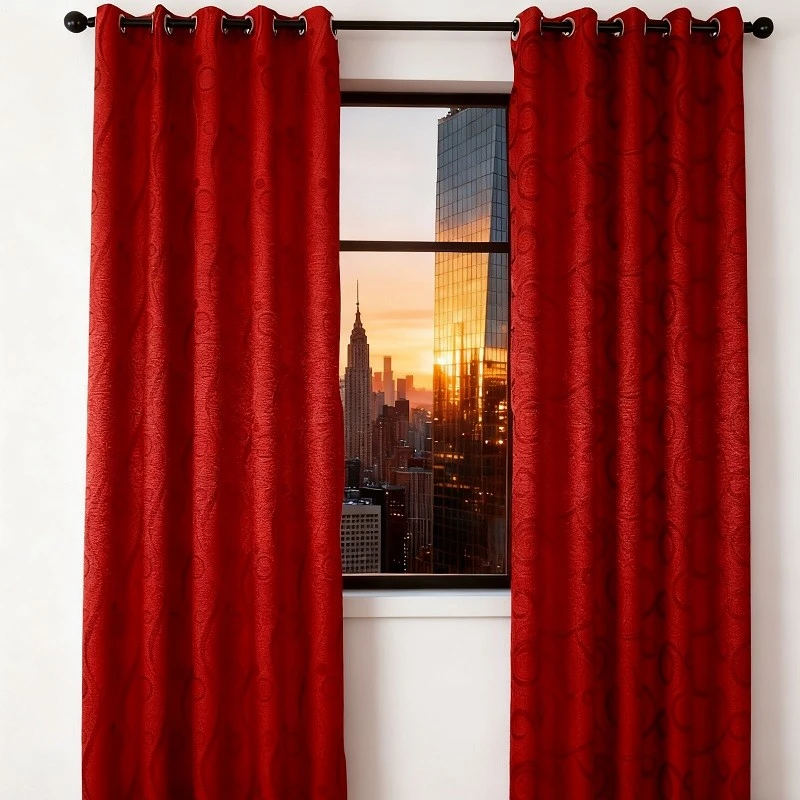
Now, let’s get into the installation steps, and I’ll throw in examples of our own fabrics to make it real. Let’s say you picked up something bright for your living room, like the Orange-yellow Cationic Jacquard Curtain Fabrics—super popular for sunrooms because the cationic dye blocks UV rays so it won’t fade. The process here is straightforward: First, measure from your curtain rod bracket (where it’ll attach to the wall) down to where you want the curtain to end. Don’t just measure the window—measure the actual rod setup. Then, add 2-3 inches for the hem and 4 inches for the rod pocket (if your fabric has one; a lot of cationic jacquard we sell comes pre-finished with a 4-inch pocket so you don’t have to sew it). Pro tip: Hang the rod at least 6 inches above the window frame to make your room look taller—trust me, that’s a trick I learned from a designer client years ago, and it works with every cationic jacquard fabric, whether it’s the Metallic Gold Fern Cationic Jacquard Curtains Fabrics (great for a dining room) or our Red Cationic Jacquard Curtain Fabrics for a bold bedroom.
Wait, what if you’re not sewing? A lot of my customers hate sewing, so I always recommend iron-on hemming tape for cationic jacquard—just make sure you use the heavy-duty kind, because the fabric is thicker than cotton. For example, if you get the Oatmeal Gray-striped Cationic Jacquard Curtain Fabrics, its medium weight pairs perfectly with iron-on tape, no sewing machine required. Just fold the hem, place the tape in between, and press with a hot iron for 10-15 seconds—easy peasy, and it holds up way better than regular fabric tape.
Now, the part that trips people up the most: pattern matching. Oh man, I can’t tell you how many times I’ve gotten a panicked call from someone who cut two pieces of Florals Cationic Jacquard Yarn-dyed Curtain Fabrics and the flowers don’t line up. That’s the thing about jacquard—each panel is woven with a pattern, so you have to match them. For Florals, which has a repeating floral design, you’ll want to cut each panel so the top of the pattern aligns with the rod and the bottom of the pattern is even on both panels. I tell customers to lay both panels flat on the floor, pattern side up, and line them up before cutting— that way, you don’t have flowers starting at different heights. It takes an extra 10 minutes, but it makes the curtains look custom, not DIY.
But wait, is there a time when I’d say “maybe skip this and call a pro”? Yeah, and it’s not because you’re not capable—it’s because of the size. If your windows are over 10 feet wide, or if you’re doing floor-to-ceiling curtains that are 9 feet tall, handling heavy cationic jacquard by yourself is a pain. That fabric is thick, so a 9-foot panel weighs a few pounds, and trying to hang it alone means you’ll be holding it up while trying to level the rod—not fun. Also, if you want to do custom stuff like adding extra headers or decorative trim (though most of our cationic jacquard fabrics look great as-is), that might be trickier if you’ve never sewn a header before. Most of the time, though, for standard window sizes (like 3-6 feet wide), you’ve got this.
Let me share a quick customer story to prove it. Last month, a girl named Mia ordered two sets of curtains from us: one in the Red Cationic Jacquard Curtain Fabrics for her bedroom, and the Oatmeal Gray-striped Cationic Jacquard Curtain Fabrics for her kitchen. She emailed me a week later saying she was worried because she’d never installed curtains before. I sent her a quick guide (the same one I’m telling you now) and she texted me a pic—they looked perfect! She even mentioned that the cationic fabric was so easy to work with, no fraying when she cut it, and the pattern matched exactly because she laid them flat first. That’s the kind of win I love seeing.
Another thing to keep in mind: cationic jacquard is pretty low-maintenance, so even if you make a small mistake (like a slightly crooked hem), it won’t ruin the fabric. Just don’t use bleach on it, and when you wash it (machine wash on cold, tumble dry low), it won’t shrink or fade. That’s the beauty of cationic dye— it’s built to last, so small DIY oopses won’t turn into big problems.
Wait, let’s talk about rod types too—because that affects installation. If you’re using a tension rod, that’s easier for beginners, but only for lightweight cationic jacquard. If your fabric is heavier (like the Metallic Gold Fern one), go for a regular curtain rod that mounts to the wall—tension rods can’t hold that weight and will fall down. I always mention that in my product descriptions, too—each of our cationic jacquard curtain fabrics has a weight note, so you can pick the right rod for it. That’s one of the perks of buying from us as a supplier—we don’t just sell fabric, we tell you exactly what you need to install it.
So, to circle back to the original question: Can you install cationic jacquard curtain fabrics yourself? Yes, if you’ve got the basic tools, take your time with measurements, and don’t skip the pattern matching step. The only exceptions are extra-large windows or if you want to add custom details you’re not sure about. And honestly, even if you do get stuck, we’re here to help—we’ve got guides, quick tips, and even a customer service team that’ll answer your questions at any point during your project.
If you’re ready to pick out your cationic jacquard curtain fabrics, we’ve got a range of styles to fit every room: bright oranges, rich gold ferns, bold reds, cozy oatmeal stripes, and delicate florals. All of them are made with that high-quality cationic dye so they’ll look amazing for years, not just months. Whether you’re a first-time DIYer or you’ve done this a hundred times, we’ve got something that’ll work for your space.
Don’t overthink it—installing cationic jacquard curtains isn’t as hard as it sounds. A little prep, some patience, and the right fabric (from us, obviously) and you’ll have them hanging in no time, and your room will look like a designer put them up. If you have questions about measurements, tools, or any of our fabrics, feel free to reach out—we’re here to help you make your space feel like home with cationic jacquard curtains that you installed yourself.
References:

- Home Decorating Institute. (2023). DIY Curtain Installation Guide for Medium to Heavyweight Fabrics. Retrieved from industry home decor resources.
- Textile Science Association. (2022). Properties of Cationic Dye Polyester Fabrics for Home Textiles. Retrieved from textile research publications.
- Curtain Rod Manufacturers Association. (2024). Weight Capacity Guidelines for Curtain Rods and Rings. Retrieved from home hardware industry standards.